




Pricing
Products
Get Proxies
Resources
Language


Pricing -70%
Dynamic Residential

Dynamic Residential Traffic (GB)
Suitable for: Data collection, market research, and data collection.
Starting from
$0.49 /GB
Premium Dynamic Residential Traffic 
Suitable for:price monitoring, AI data scraping and other high-demand scenarios.
Starting from
$0.90 /GB

Dynamic Residential IP (Lines)
Suitable for: Email registration, web scraping, surveys, and other use cases.
Starting from
$0.027 /IP

Unlimited traffic - bandwidth
Suitable for: high-volume downloads of audio, video, and other data.
Starting from
$34.5/day

Unlimited Traffic - Port
Suitable for: questionnaire surveys, text and image downloads, and Brand protection.
Starting from
$0.31/Port/day
Static Residential
Products
Products
SERP API
Get real-time search engine results with multi-engine and multi-region support.
Dynamic Residential Traffic
Global resources with precise city-level positioning.
Unlimited Residential Traffic
Supports multiple ports and high bandwidth, unlimited traffic IPs with no extra fees.

Long-term Static ISP
Exclusive long-term static resources, providing unparalleled speed and reliability.
Popular Areas
Get Proxies
Resources
Get Started
Why Home IPs Are Popular: Types, Differences and Uses
 Ivan Dmitriy Petrov
 2026-11-18
When working in cross-border e-commerce, social media management, or overseas market research, it is often necessary to understand network environments in different regions. The same webpage or product may look completely different depending on where it is accessed. Knowing which country an IP address belongs to is not always enough, as the content local users actually see can also depend on the network source. Home IPs are a type of network resource frequently used in these scenarios.
Home IPs use regular residential broadband connections, which differ from the network sources of data center IPs. They can also be dynamic or static, while terms such as Residential IP and ISP IP are often used in the market and can be confusing. To understand these concepts, it helps to distinguish between IP assignment methods, network sources, and actual use cases.
A Home IP generally refers to the IP address used by a household when accessing the internet through an Internet Service Provider (ISP) broadband connection. It is also commonly called a Home Broadband IP. When phones and computers at home connect to broadband and access websites, external websites identify the public IP address associated with the broadband connection, rather than the private IP addresses assigned to devices within the local network.
After a household subscribes to a broadband service, the Internet Service Provider provides network access and assigns IP addresses according to its network configuration. Phones, computers, and other devices at home typically share the broadband connection through a router. When accessing external websites, they use the public IP address associated with the network’s outgoing connection.
Not every household broadband user has an independent public IP address. Under Carrier-Grade Network Address Translation (CGNAT), multiple users may share the same public IP address. The actual public IP address used by a household depends on the network configuration of its ISP.
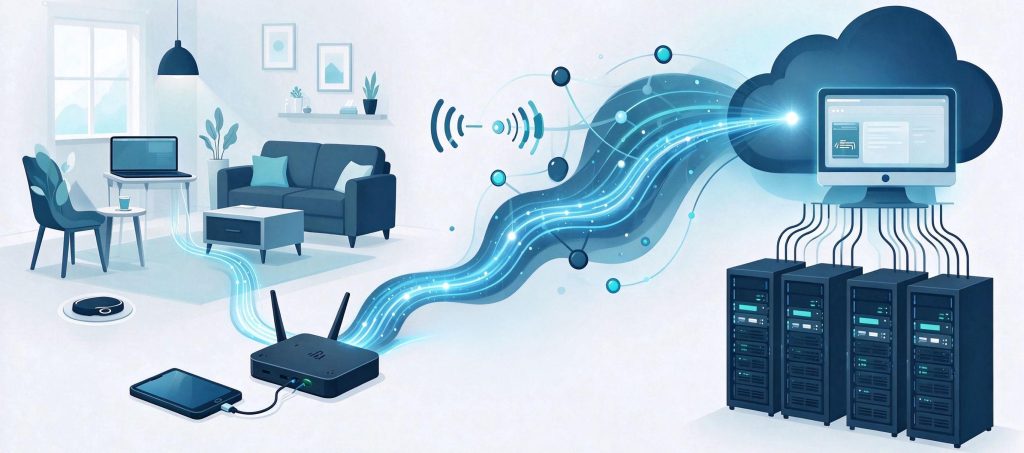
Based on how IP addresses are assigned, Home Broadband IPs fall into two main categories: dynamic IPs and static IPs.
Dynamic Home Broadband IPs are assigned by ISPs and may change due to network reconnections, lease renewals, or adjustments made by the provider.
This is a common configuration for regular residential broadband connections. For everyday activities such as browsing websites, watching videos, and using social media, a fixed IP address is usually unnecessary, so a dynamic IP is generally sufficient. However, reconnecting to the internet does not necessarily result in a new IP address. How frequently an IP changes depends on the ISP’s assignment policy.
Static Home Broadband IPs remain unchanged over an extended period and are typically provided by ISPs through fixed configurations. They are suitable for scenarios that require a stable network entry point, such as remotely accessing home devices or configuring IP allowlists.
A static public IP requested by a regular household user from an ISP is not necessarily the same as a long-term static ISP IP offered by commercial network service providers. Both may have fixed addresses and ISP network attributes, but their resource sources, network deployment methods, and usage conditions can differ.
The main differences between these two types are outlined below:
| Comparison | Dynamic Home Broadband IP | Static Home Broadband IP |
| IP Assignment | Dynamically assigned from an IP address pool by the ISP | Assigned through a fixed configuration |
| IP Changes | May change due to network reconnections, lease renewals, or ISP adjustments | Usually remains unchanged over an extended period |
| Common Uses | Everyday browsing, video streaming, and social media | Remote access to home devices, IP allowlists, and other scenarios requiring a stable entry point |
| Availability | Commonly included in regular residential broadband plans | Usually requires a separate request or a specific commercial plan |
Choosing between a dynamic and static IP mainly depends on whether your business needs to maintain the same network address over time. A dynamic IP is generally sufficient for everyday internet use that does not require a fixed address. A static IP is worth considering when remote access, IP allowlisting, or a long-term stable entry point is necessary.
Home IPs, Residential IPs, Data Center IPs, and ISP IPs frequently appear in commercial network service descriptions. However, these terms emphasize different aspects of an IP address.
Home IPs emphasize IP addresses used by regular household users through residential broadband connections. Residential IP, on the other hand, is a relatively broad commercial category commonly used to describe IP resources associated with residential networks.
Home Broadband IPs generally fall within the Residential IP category. However, an IP address labeled as Residential does not necessarily prove that its actual connection comes from a regular household broadband line.
The main difference between Home IPs and Data Center IPs lies in their network sources and connection environments. Home IPs are associated with regular residential broadband networks, while Data Center IPs mainly come from data centers, cloud servers, or hosting providers. They are commonly used for website hosting, server deployment, and cloud computing.
| Comparison | Home IPs | Data Center IPs |
| Network Source | Residential broadband networks | Data centers or cloud server networks |
| Common Providers | ISPs serving household users | Data centers and cloud service providers |
| Network Characteristics | Associated with residential networks | Associated with server hosting networks |
| Common Uses | Everyday internet access and regional network access | Website hosting, server deployment, and cloud computing |
Websites and online platforms may consider network sources when evaluating incoming connections. They often take other factors into account as well, including access frequency, device information, and account activity. Using a Home IP does not automatically guarantee a better user experience, just as using a Data Center IP does not mean it cannot meet normal business requirements.
ISP stands for Internet Service Provider. The term ISP IP emphasizes the provider associated with an IP address and its network characteristics, while Home Broadband IP focuses on the actual network source.
Even if an IP address is registered under a local ISP, it may be used for corporate networks, commercial broadband services, or other types of network connections. This does not necessarily mean it comes from a regular household broadband line. ISP attributes can indicate an IP’s association with a provider’s network, but they cannot independently confirm that it originates from a household broadband connection.
In simple terms, Home Broadband IPs generally have ISP network affiliations, but not all IPs associated with ISPs are Home Broadband IPs. Understanding the relationship requires looking at the actual network source and other relevant information.
Home IPs attract attention not only because they come from regular residential broadband networks, but also because network sources, ISP affiliations, and geographic attributes are all relevant when understanding a target network environment.
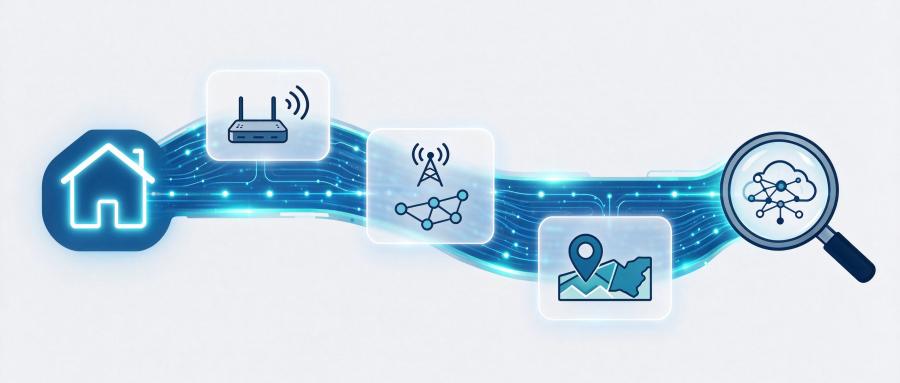
Some websites and online platforms consider an IP address’s network type and organization to identify the general characteristics of an incoming connection. For businesses that need to understand how ordinary users access the internet, the network source behind an IP address is also worth considering.
However, network source is only one of the factors platforms may use when evaluating an access environment. They generally consider other factors as well, such as user activity, device information, and account status.
ASN and ISP information can help identify the network organization associated with an IP address and its corresponding Internet Service Provider. These details can provide an initial indication of whether an IP belongs to a local ISP network or a different network, such as a cloud service provider or data center.
For businesses that need to understand the network background of an IP address, this information can serve as a useful reference. However, an ISP network affiliation does not necessarily mean the actual connection comes from a residential broadband line. Additional information is needed for further verification.
Home IPs have geographic attributes and are also associated with the broadband access methods and ISP resources available in a particular region. Rather than focusing only on the country or region assigned to an IP address, Home IPs can also provide insight into the network types and ISP affiliations used by ordinary households in the target market. This helps users better understand the local network environment.
Home IPs can help users observe website content, platform pages, and network service performance in target regions. The appropriate way to use them depends on specific business requirements.
When running e-commerce or social media operations for overseas markets, product information, webpage content, and platform displays may vary across countries and regions. Using a Home IP from the target region allows users to view relevant pages through a local network exit and understand how content is displayed in that market.
Cross-border e-commerce operators can check product prices, promotional information, and page content across different regions to identify variations in local market displays. Social media managers can observe how content and pages appear in target regions, providing useful references for daily operations and market research.
Some AI tools and streaming platforms offer different services, features, or content depending on the user’s region. Certain features may only be available in specific locations, while streaming platforms may display different movie and TV catalogs across markets.
Using a Home IP from the target region allows users to view local service pages and content displays, helping them understand differences between regional offerings. However, IP location is not the only factor that determines service availability. Regional policies, account status, payment methods, and other conditions may also affect actual access.
When collecting overseas data or checking ad displays, target websites may show different product information, search results, or advertisements based on the visitor’s location. Using a Home IP from the relevant region allows users to view these pages through a local network exit, helping with regional data collection and ad display verification.
For overseas e-commerce data collection, users can check product prices and page information across different regions. When verifying ad displays, they can confirm whether advertisements appear as expected in the target market and identify differences in content between regions.
For data collection projects that need to run continuously, it is also important to plan usage based on request frequency, IP change patterns, and actual network performance.
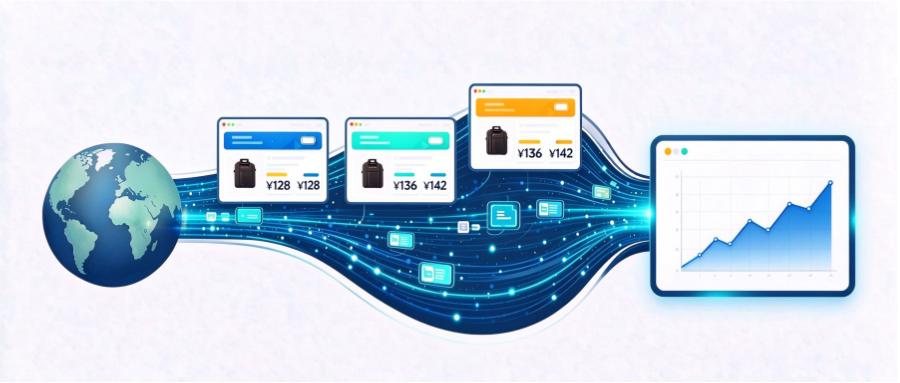
IP lookup tools can help identify an IP address’s network affiliation, ISP, and type. To determine whether an IP comes from a genuine residential broadband connection, it is best to examine ASN, ISP, and results from multiple databases rather than relying on a single lookup.
An IP lookup tool provides information such as ASN, Organization, and Type. ASN (Autonomous System Number) identifies the network organization associated with an IP address. If Organization shows a local broadband provider and Type is labeled ISP, the IP is likely associated with a local ISP network. If it shows a cloud service provider or data center operator with the Type labeled Hosting, the IP may come from a data center network. However, ISP classification alone cannot confirm a genuine household broadband connection.
Different IP databases may use different data sources and classification standards. Comparing ISP names, network types, and connection types across multiple databases can provide a more reliable reference. However, third-party databases rely on IP allocation records, network registration data, and other information. Labels such as Residential, ISP, and Cable/DSL cannot directly confirm an IP’s physical connection source.
The value of a Home IP is not determined solely by its geographic location. Its underlying network source matters just as much. Home Broadband IPs come from regular residential broadband networks and have a different connection environment from Data Center IPs. This is why they attract attention in scenarios such as regional access, content viewing, and data collection.
Whether a Home IP works well for a particular purpose depends on two key factors: whether its network source is genuine and whether its IP assignment method matches the business requirements. Choosing a Home IP is not about pursuing a particular type, but about finding the right fit for the intended use. The network source should meet expectations, the IP assignment method should be suitable, and the resource should serve the actual use case. When these factors align, Home IPs can deliver their intended value.
They generally refer to the same category of residential network resources, but the terms emphasize different aspects. Home IP highlights the network source, specifically regular household broadband connections. Residential IP is a common commercial product category, and the resource sources and network deployment methods may vary between providers.
Not necessarily. Different providers may have different definitions and screening standards for Residential IP resources. Some products may include ISP network resources that do not originate from regular household broadband connections. Before purchasing, ask the provider whether the IPs come from genuine local residential broadband networks and confirm the specific connection type.
Not necessarily. Home IPs and Data Center IPs come from different network sources and are suited to different use cases. Home IPs have network characteristics that are closer to those of ordinary residential users, but actual performance also depends on factors such as IP history, sharing arrangements, and platform policies.
Exclusive 1024proxy Blog Reader Offer – First-Order Discount for New Users
1024proxy offers premium residential IPs for diverse business needs.
Use code uROEztvZMk at checkout for 5% off your first order.
For IP purchasing or usage assistance, contact us at: support@1024Proxy.com
Telegram
 Sales Manager

@proxy1024

 Sales Manager

@proxy1024_com
Private transfers are not accepted. Please make the payment through the official website!
Emai
Official Email
support@1024proxy.com 
-Provide your account and describe the issue you encountered.
- We will respond within 24 hours.