


Pricing
Products
Get Proxies
Resources
Language


Pricing -70%
Dynamic Residential

Dynamic Residential Traffic (GB)
Suitable for: Data collection, market research, and data collection.
Starting from
$0.49 /GB
Premium Dynamic Residential Traffic 
Suitable for:price monitoring, AI data scraping and other high-demand scenarios.
Starting from
$0.90 /GB

Dynamic Residential IP (Lines)
Suitable for: Email registration, web scraping, surveys, and other use cases.
Starting from
$0.027 /IP

Unlimited traffic - bandwidth
Suitable for: high-volume downloads of audio, video, and other data.
Starting from
$34.5/day

Unlimited Traffic - Port
Suitable for: questionnaire surveys, text and image downloads, and Brand protection.
Starting from
$0.31/Port/day
Static Residential
Products
Products
SERP API
Get real-time search engine results with multi-engine and multi-region support.
Dynamic Residential Traffic
Global resources with precise city-level positioning.
Unlimited Residential Traffic
Supports multiple ports and high bandwidth, unlimited traffic IPs with no extra fees.

Long-term Static ISP
Exclusive long-term static resources, providing unparalleled speed and reliability.
Popular Areas
Get Proxies
Resources
Get Started
Free Residential IPs: Uses, Risks, and Limitations
 Erik Magnus Svensson
 2026-11-14
When looking for residential IPs, free resources can be appealing. For users with limited budgets or no need for long-term use, free residential IPs may seem like a good option. However, getting an IP for free does not necessarily mean it is suitable for practical use. Factors such as network type, connection stability, and security can all affect the user experience.
So, are free residential IPs worth trying? What are they suitable for, and what limitations should you be aware of?
A residential IP is generally an IP address assigned by an Internet Service Provider (ISP) to a home broadband user. It is associated with a residential internet connection and differs in network origin from a data center IP. Residential IPs are commonly used in scenarios where a specific network source or IP type is required. For more information, see What Is a Residential IP? A Guide to Types and Uses.
A free residential IP is a residential network IP that users can obtain and use without making a direct payment. In other words, it must meet two conditions: it comes from a residential network and is available at no cost.
Users can look for free IP resources through several channels, but not all of them provide residential IPs.
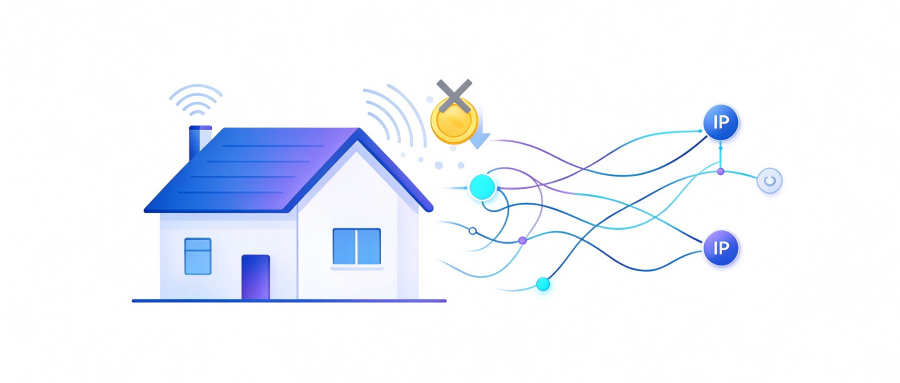
Free IPs, free residential IPs, and free network IPs all refer to IP resources that can be obtained without direct payment, but their meanings are not exactly the same. Free IPs and free network IPs are relatively broad terms because neither specifies the IP’s network type.
| Name | Meaning | Network Type |
| Free IP | An IP resource that can be obtained without direct payment. The term focuses on the cost of access. | Not specified. It may be a residential IP or a data center IP. |
| Free residential IP | A residential network IP resource that can be obtained without direct payment. | Limited to residential networks. |
| Free network IP | A broad term for IP resources provided at no cost. | Not specified. |
The biggest advantage of free residential IPs is that they do not require direct payment. However, free resources may also come with practical limitations. Understanding both sides can help you decide whether they meet your needs.
No Direct Payment Required
The most obvious advantage of free residential IPs is their low cost. Users can access these resources without purchasing a plan or paying regular service fees. This can help reduce initial expenses, especially for those on a limited budget or who do not want to spend money on IP services yet.
A Chance to Try Basic Features
Some service providers offer free trial allowances, allowing users to test the connection method, configuration process, and basic performance before deciding whether to purchase a plan. This can also help first-time users become familiar with residential IP services.
IPs May Stop Working, and Connection Speeds May Be Unstable
The availability and connection quality of free IPs can vary. Some IPs may fail to connect as soon as they are obtained, while others may experience slow speeds or interruptions during use. Their availability is often difficult to guarantee in advance.
The Same IP May Be Used by Multiple People
Some free IP lists are publicly available, allowing multiple users to access the same IP address. Repeated use by different people may affect connection quality and stability. These resources may not be suitable for scenarios that require an IP address for individual use.
Not All of Them Are Genuine Residential IPs
Some free resources do not provide accurate information about their network type. Even if a resource is labeled as a residential IP, it may actually come from a data center network. Without further checks, it is difficult to confirm an IP’s actual type based on its label alone.
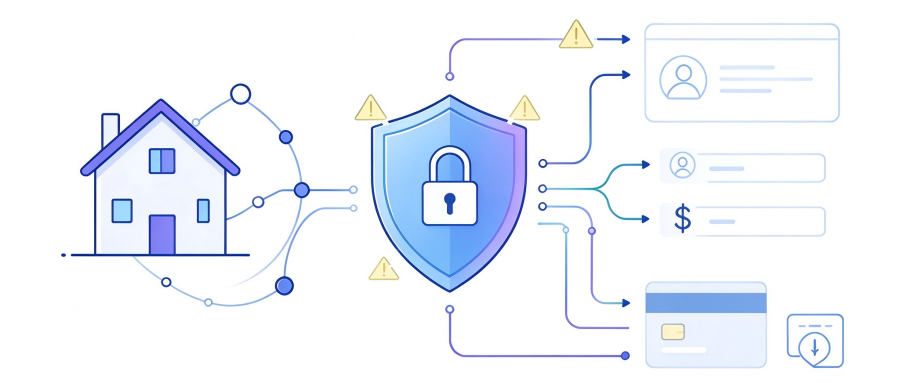
Potential Security Risks
Some free resources do not clearly explain how user network data is handled and may lack adequate privacy protections. If a provider does not have appropriate safeguards, user data may be recorded or used improperly. For this reason, avoid entering account passwords, payment details, or other sensitive information when using IP resources from unknown sources.
Although free residential IPs have certain limitations, they can still be a low-cost option for tasks with relatively basic requirements.
If you only need to check whether an IP can connect properly or temporarily access a specific webpage, a free resource may be sufficient.
For example, developers may need to test connection performance across different network environments, while regular users may simply want to access a website from a particular region. These tasks usually do not require the same IP to be used for an extended period, and connection stability may be less critical.
Free resources may also be an option for individuals who only need residential IPs occasionally.
For example, if you visit a webpage in a specific region once in a while or perform simple personal tasks, you may not need long-term IP access or a continuous connection. When tasks are short and usage is infrequent, free resources can serve as a low-cost option.
If you have never used residential IPs before, you may not be familiar with their connection methods, configuration processes, or actual performance. In this case, free resources can help you get started with the basic operations.
During the trial, you can become familiar with connection configuration, checking IP information, and the settings involved in using residential IPs. These initial attempts can give you a basic understanding of the service and help you decide whether you need to use it further.
For businesses that need to run continuously, IP stability, clear resource information, and access to support when problems occur can all affect daily operations. Although free IPs do not require direct payment, insufficient resource quality and service support may create additional time costs and management pressure.
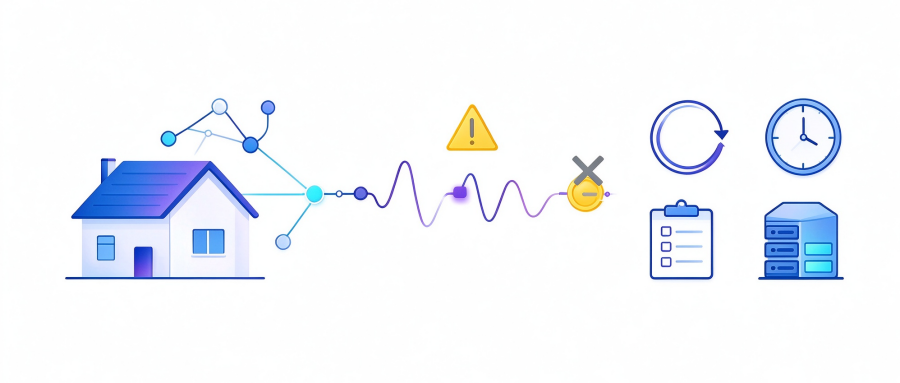
Some tasks in e-commerce operations, account management, advertising, and data collection require a continuous network connection. If an IP disconnects, experiences speed fluctuations, or becomes inaccessible, tasks may be interrupted and work schedules may be affected.
For example, a data collection task may need to run continuously according to a set schedule. If the IP stops working during the process, data collection may be interrupted. Users then need to check the connection and restore the task.
For these types of business activities, a stable connection is often more important than getting an IP for free.
When using IP resources over the long term, it is important to understand more than just connection performance. Users may also need information about the IP’s location, network type, sharing status, and usage conditions.
However, some free resources do not provide complete information, so users have to check and verify these details themselves. If a large number of IPs are involved, each resource may need to be recorded and checked individually. Without a consistent management process, screening and maintenance can become more time-consuming and difficult.
The availability of free IPs is not guaranteed. If an IP stops working, users may need to find another resource, test the connection, and replace the unavailable IP in their existing configuration.
Each individual task may not take much time, but repeating these steps can take up a considerable amount of time in the long run. For example, if you spend one hour each week finding available IPs, testing connections, and replacing failed resources, that adds up to around 48 hours over 48 weeks in a year. This is equivalent to six eight-hour working days.
Therefore, the actual cost of using an IP is not limited to its purchase price. It also includes the time spent on testing, maintenance, replacement, and troubleshooting.
When using free IPs, users generally need to identify and resolve problems themselves if they encounter connection failures, configuration errors, or unavailable resources.
Some paid services provide configuration instructions, technical documentation, or customer support to help users deal with issues. For businesses that need continuous operation, the lack of timely technical support may increase the time required for troubleshooting and recovery, potentially affecting work progress.
Although free residential IPs can reduce costs, it is still important to consider resource sources, IP types, and data security when obtaining and using them.

If you only need to test a connection temporarily or access webpages occasionally, free resources may be worth trying. However, if your business requires a stable, long-term connection, consider paid products with more reliable resources and service support, such as 1024proxy’s Dynamic Residential IPs or Long-Term Static ISP.
Prioritize platforms that clearly identify their providers, resource sources, and usage rules. Avoid downloading software or installing unfamiliar applications from websites with unclear origins.
You can use an IP lookup website to check details such as location, ISP, ASN, and network type. Compare the results with your requirements, and use multiple websites for cross-checking when necessary.
Before using a service, review its privacy policy and data handling practices. When using resources from unknown sources, avoid logging into important accounts, entering passwords, or transmitting payment details and other sensitive information.
Free residential IPs are not necessarily a bad option. What matters is whether they meet your actual needs. For temporary testing, simple browsing, or an initial experience with residential IPs, free resources can be a low-cost choice. However, before using them for business activities, make sure to check the IP’s actual type, connection performance, and security. Do not focus only on whether a resource is free while overlooking its practical performance.
No. Free resources may come with usage periods, traffic limits, or unstable connections, making them less suitable for long-term business needs that require stable IP access.
No. Some resources labeled as residential IPs may actually come from data center networks. You can use an IP lookup tool to check the ISP, ASN, and network type.
Not necessarily. Their safety depends on the resource source and how the provider handles user data. When using IPs from unknown sources, avoid logging into important accounts or transmitting sensitive information.
Not necessarily. A low price does not guarantee reliable quality. For regular business use, prioritize IP quality, connection stability, and service support rather than focusing only on price.
Before using one, confirm its actual network type, resource source, and usage restrictions. You should also review the service provider’s privacy policy. Be cautious when using resources from unknown sources.
Exclusive 1024proxy Blog Reader Offer – First-Order Discount for New Users
1024proxy offers premium residential IPs for diverse business needs.
Use code uROEztvZMk at checkout for 5% off your first order.
For IP purchasing or usage assistance, contact us at: support@1024Proxy.com
Telegram
 Sales Manager

@proxy1024

 Sales Manager

@proxy1024_com
Private transfers are not accepted. Please make the payment through the official website!
Emai
Official Email
support@1024proxy.com 
-Provide your account and describe the issue you encountered.
- We will respond within 24 hours.